The Global Story
Use BBC.com or the new BBC App to listen to BBC podcasts, Radio 4 and the World Service outside the UK.
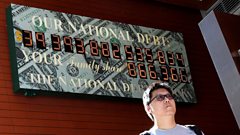
America’s national debt recently hit a new milestone of $40 trillion. It is estimated that interest payments on the national debt are now the second largest expense in the US government budget, trailing only social security. How was the US able to borrow so much and for so long? One answer, according Harvard economist Kenneth Rogoff, is the US dollar’s status as the world’s reserve currency. In this episode, Rogoff, former chief economist at the International Monetary Fund, explains how the US dollar came to enjoy this hegemonic status, what being the world’s reserve currency actually means in practice, and why he believes the dollar is now in decline. (Photo: An Asian-American man passes by the passes by the National Debt Clock in New York City, US, 19 August, 2026. It is a digital display screen that shows the National Debt figures 39, 393, 882, 535, 284 against a background of dollar notes. Credit: Brendan McDermid/Reuters) Producer: Valerio Esposito, Aron Keller and Lucy Pawle Executive producer: James Shield Sound engineer: Travis Evans Senior news editor: China Collins
Source: BBC News. Summary reproduced for informational purposes.
Related
 Economy
Why are European countries moving their gold out of North America?
The Netherlands has relocated 86 tonnes of the shiny stuff - what's going on?
 Economy
Rich people more likely to steal children’s sweets, finds Ig Nobel prize-winning study
We round up this year’s winners at awards for achievements that ‘first make people laugh and then make them think’ It’s that time of year again: a select group of scientists have been summoned to a ceremony to receive coveted prizes, be showered in paper plane
 Economy
Yen soars as Bank of Japan tipped to raise interest rates
Jump lifts currency to highest level against dollar in a month, while global markets remain jittery Business live – latest updates The Japanese yen has soared by more than 2% against the dollar amid speculation the Bank of Japan is set to raise interest rates.
 Economy
NI employers named for not paying staff minimum wage
Across the UK, more than 600 employers were ordered to pay affected workers the outstanding wages, with £4m returned to workers.
Never miss a headline
The biggest stories in business and finance, delivered to your inbox. Join thousands of readers — unsubscribe any time.