Study: CAP changes threaten smaller farms and risk more exits
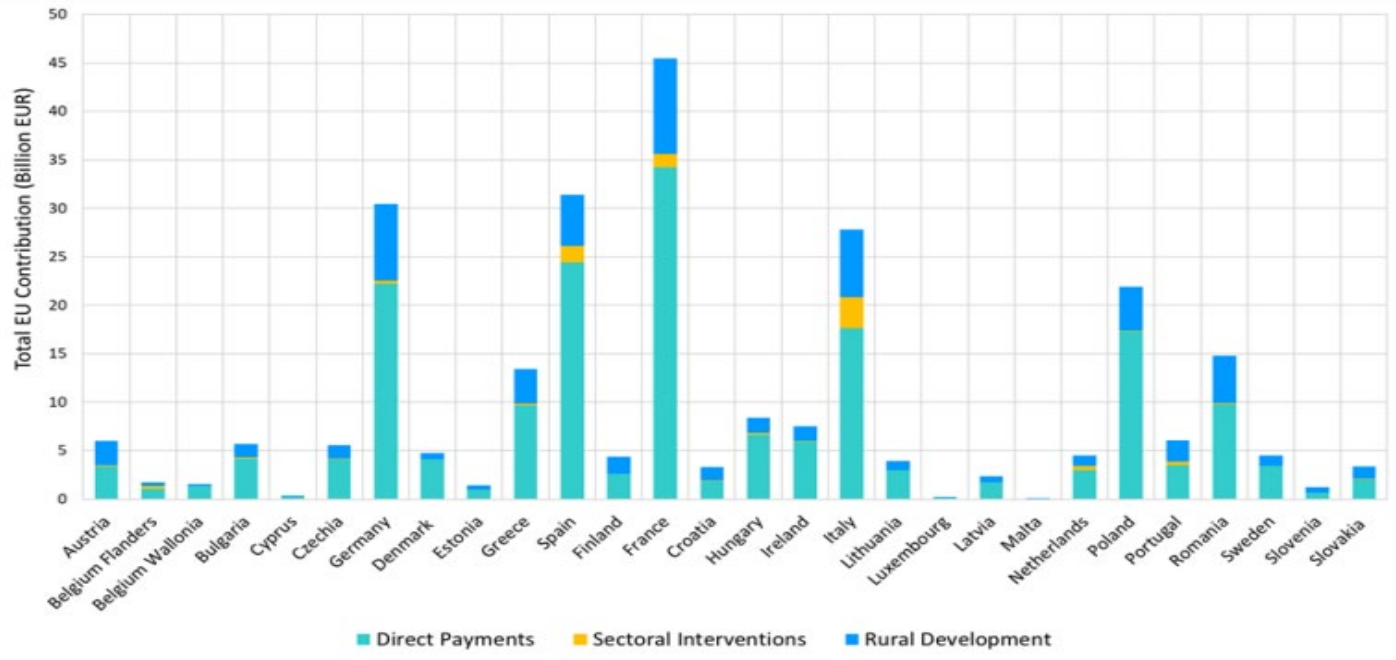
The European Commission’s proposals for the 2028-2034 Multiannual Financial Framework (MFF) otherwise known as the EU Budget and the Common Agricultural Policy (CAP) would represent a significant restructuring of EU agricultural support and could threaten smaller farms.
That is the one of the conclusions of a research study commissioned by the European Parliament and completed by University College Cork (UCC) research team, Thia Hennessy and Tesfai Tsegai.
The proposed reforms would replace the current two-pillar CAP architecture with a more flexible system delivered through National and Regional Partnership Plans (NRPPs).
This would be while also maintaining a minimum ring-fenced allocation for agricultural support.
The proposals aim to simplify implementation, improve targeting, strengthen resilience and provide greater flexibility to member states.
However, the proposals also raise concerns about the future level of agricultural funding, the balance between common EU objectives and national flexibility, and the implications for farm incomes, environmental outcomes and the long-term viability of farming across the EU.
The study assessed the potential implications of the proposed 2028-2034 CAP architecture for the viability of EU farms.
It compares the principal interventions proposed under the new CAP with their counterparts under the 2023-2027 framework, examines likely resource allocations under the ring-fenced agricultural budget, and evaluates the potential impacts of the reforms on different farm types, farm sizes and member states.
Particular attention was given to income support, coupled support, environmental measures and resilience instruments, as well as the role of member state implementation choices in determining outcomes.
Key findings of study
During 2021-2023, approximately one-third of EU farms generated sufficient returns to cover both cash and imputed costs (land, labour and capital).
A further half covered cash costs but not imputed costs, while the remainder were loss-making.
Smaller farms, non-dairy livestock farms and farms in constrained areas were particularly vulnerable.
The researchers outlined that direct payments remain a key income source, especially for smaller farms and grazing-livestock systems where market-based returns are relatively low.
In many cases, direct payments account for a substantial share of family farm income and contribute significantly to maintaining agricultural activity in rural and peripheral regions.
While larger farms receive higher levels of support in absolute terms because of their greater land area, smaller farms are generally more dependent on support relative to their income.
Source: Isbasoiu and Fellmann 2024
The study states that as a result, reductions in direct payments are likely to have proportionally greater effects on smaller farms, increasing the risk of farm exit and accelerating structural change in some regions.
The proposed minimum ring-fenced CAP budget of about €300 billion implies an estimated 15% reduction relative to a comparable current baseline.
While additional funding may be available through the NRPP funds, access to such funding will depend on national priorities and political choices, the researchers have said.
This, they added, introduces greater uncertainty regarding future support levels than under the current CAP framework.
Income support
Simulation results suggest that a 15% reduction in decoupled income support would disproportionately affect smaller farms, non-dairy livestock systems and member states where CAP payments account for a large share of farm income.
The study found that the consequences would vary considerably across the EU, reflecting differences in farm structures, productivity levels and existing levels of public support.
Farming type Baseline direct payments Post-reduction direct payments Baseline FNVA Reduction in direct payments Post-reduction FNVA FNVA reduction Other grazing livestock €14,70
Source: Agriland. Summary reproduced for informational purposes.
Related
 Agriculture
Domestic milk intake down almost 13 million litres in September
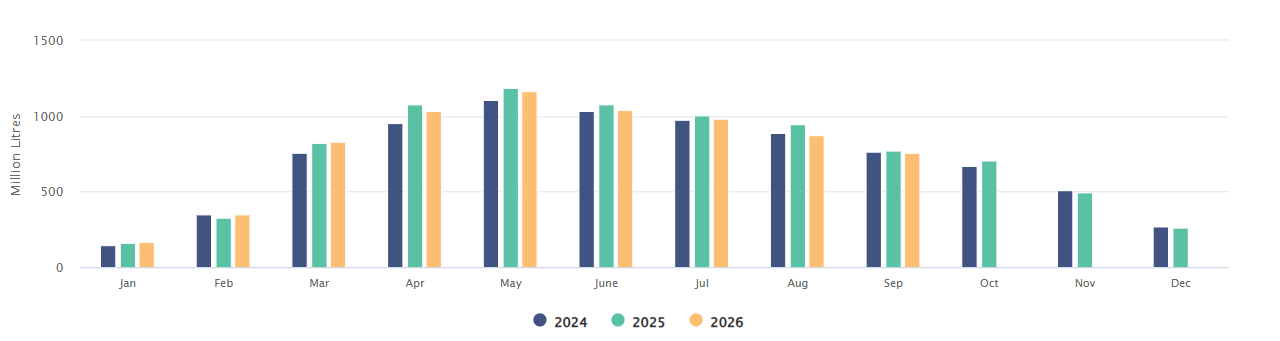
Domestic milk intake by milk processors and co-ops was estimated at 760.4 million litres in September 2026, according to the Central Statistics Office (CSO). According to the Milk Statistics September 2026 report, this is a decrease of 12.8 million litres or 1
 Agriculture
ESB Networks Autumn Safety Series 2026: Stay vigilant around electricity
The changes due in weather over the coming weeks, along with the onset of shorter days, is no doubt increasing the pressure on farmers to get field work completed. This extra pressure brings its own safety risks, and ESB Networks is asking farmers to also be m
 Agriculture
What is the expert advice for dry-off?
It is hard to think that dry-off is only around the corner, but there is no denying how quickly it is creeping up, so it is best to get prepared now. Realistically, a lot of farmers do not think about drying-off procedures until it is time to actually carry ou
 Agriculture
Genetic Jewels sale to feature 65 in-lamb Charollais on November 7
Blessington Mart in Co. Wicklow is set to host the Genetic Jewels sale on Saturday, November 7. A total of 65 in-lamb pedigree Charollais hoggets and ewe lambs are catalogued and the sale “promises to be an excellent chance to obtain some of the best Charollai
Never miss a headline
The biggest stories in business and finance, delivered to your inbox. Join thousands of readers — unsubscribe any time.