‘No one cares about the little guy’: Sri Lanka’s fishers still reeling from 2021 toxic plastic spill

A stricken container ship shed tonnes of tiny pellets called nurdles on the west coast. Five years on, locals are counting the cost to marine life and livelihoods
O n the beach in Pamunugama, on Sri Lanka’s west coast, women in uniform work under the scorching sun. They sift through rubbish washed ashore, searching among the usual litter for something much smaller: tiny plastic pellets.
Five years ago, in May 2021, this same beach was swamped with pellets as smoke rose over the Indian Ocean.
In May 2021, after the MV X-Press Pearl caught fire 10 miles off this stretch of coast. The Singapore-flagged container ship was carrying 1,486 containers, including tonnes of hazardous materials such as nitric acid. As the blaze intensified, containers fell overboard and billions of pellets known as nurdles , which are used to make most plastic items, spilled into the sea before the vessel sank .
In the weeks that followed, hundreds of dead marine animals washed ashore , including more than 100 turtles and dozens of dolphins.
“The coconut trees turned black and died. Baby coconuts started falling. We know by experience that this is not normal and was a result of the disaster,” says Roger Peiris, who was working for the YMCA at the time and went on to advocate for fishers and other affected communities to have a greater role in the recovery efforts.
Five years later, nurdles are still washing ashore.
Jude Sulanta, a local fisher, says the problem gets worse during the monsoon season: “The nurdles come to the shore with the strong wind, when the sea is rough. When the sea is calm, they are stuck on the ocean floor.”
Damaged fishing grounds have made livelihoods increasingly difficult to sustain, say many of the fishers. And they are still waiting for compensation.
Those losses sit at the centre of a sprawling legal battle over responsibility. In July 2025, Sri Lanka’s supreme court issued a ruling ordering the companies behind the X-Press Pearl to pay an initial $1bn, with further compensation to be determined . The court also found serious failures by several Sri Lankan state authorities and ordered a fresh investigation into allegations of corruption surrounding efforts to assess and recover compensation.
More than a year later, almost all of the court-ordered sum remains unpaid. The vessel’s owner, X-Press Feeders, and insurer, London P&I, have disputed the ruling and its approach to maritime liability, while talks with the Sri Lankan government continue. A separate compensation case brought by Sri Lanka in Singapore remains active but is on hold pending related proceedings in London.
Although interim compensation was paid for income lost during the post-disaster temporary fishing ban, fishers say the way claimants were classified excluded many of the people affected.
“A lot of genuine fishers missed getting compensation,” says Sulanta.
Several fishers argued that larger operators and well-resourced parts of the industry were better placed to lobby officials, while small-scale fishers lacked the documentation, time or connections to make claims.
“The bigger boats and dry fish industry have better and more influential representation with the authorities,” says Anthony Nishantha, a local fisher who helped lawyers pursuing damages for the disaster. “Us smaller fishers don’t have the same lobbying power.”
An initial assessment by the government-appointed expert panel put the disaster’s environmental damage at $6.4bn (£4.8bn).
“The initial impacts included the direct effects on fishing caused by debris and parts of the damaged ship,” says Prof Prasanthi Gunawardena, an environmental economist and co-chair of the panel. “But based on research from elsewhere, we predicted that there would also be longer-term fishing losses.”
Fishers describe continued damage to fishing nets.
“When the fishing net is cast on the rocks, it pulls something like cotton wool,” Nishantha says. “This started happening with the disaster.”
They suspect contaminants from the spill are responsible, although the cause has not been independently established.
They also describe changes in rocky reefs where fish have traditionally gathered and bred. Knowledge of these grounds has been passed down through generations, allowing fishers to identify fishing areas without GPS technology.
“We are generational fishers,” says Ranga Fernando. “My father showed me where different types of fish gather.”
But, he explains, inherited knowledge has become less reliable since the disaster, as familiar patterns have changed. Nishantha points to Thambugala, a well-known fishing area close to where the vessel went down, where he says fish still gather but no longer appear to breed in the same numbers.
“Even just a few weeks ago, two or three turtles washed up on the shore,” he says. “That is usually very rare, but we are seeing these things more.”
Fishers say the impact on the lagoon in Negombo, which opens into the sea, has received less attention. Jude Anthony, who farms fish there, says nurdles and other pollution inundated his pens after the disaster, killing stock he had spent months raising.
“Everyone is talking about the fish that were destroyed on that day,” he says. “But even now we cannot fish properly.”
The fishers acknowledge that wider pollution from urban development was already affecting the industry. But they believe the X-Press Pearl disaster compounded existing problems. Combined with rising living costs, these pressures have made fishing increasingly difficult to sustain, pushing locals to sell their boats or seek work abroad.
“There are fewer people in the village. They went overseas to support their families,” Sulanta says.
The Centre for Environmental Justice (CEJ), which helped bring the supreme court case, says it is continuing to pursue enforcement of the $1bn ruling. So far, only about $1m has been paid .
“We are in the process of challenging the non-enforcement of the court order, nationally and internationally,” says Hemantha Withanage, co-founder and chair of the CEJ. “This is how corporations discriminate against less powerful developing countries.”
Five years of meetings, claims and uncertainty have left many fishers increasingly disillusioned, while the daily need to earn a living makes the pursuit of justice a luxury they cannot afford.
“No one cares about the little guy,” says Anthony. “We are not educated. We don’t know where to go to speak about these issues, so we are not taken care of. We can’t speak directly with the people at the top, so what more can we do?”
In the end, he says, fishers are left with little choice but to carry on: “We mind our own business, and we work and we live.”
A spokesperson for X-Press Feeders says: “ We know and acknowledge that the sinking of the X-Press Pearl had an impact on the environment of Sri Lanka but cannot assume that all nurdles collected today must be originating from the X-Press Pearl incident, not least given there have been other substantial nurdle spills in Sri Lankan waters.”
They add: “We respectfully disagree with the ruling of Sri Lanka’s supreme court and could not make payment because the ruling relied wholly on assessments by Sri Lanka’s Marine Environment Protection Authority that international experts have since discredited. The supreme court also did not consider the ongoing compensation proceedings in Singapore initiated by the Sri Lankan government itself.”
The Sri Lankan government and London P&I did not respond to requests for comment.
Source: The Guardian. Summary reproduced for informational purposes.
Related
 Business
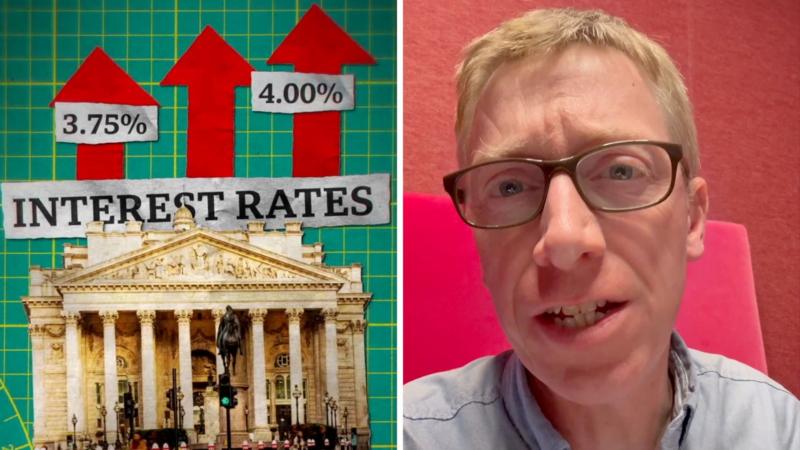
What does the raise in interest rates mean?
The BBC's cost of living correspondent Kevin Peachey explains what the change could mean for those saving for a holiday or to buying a house.
 Business
Today’s UK interest rate rise unlikely to be the last unless Iran war ends, Bank of England warns – business live
UK hit by first interest rate rise in three years, as Bank predicts inflation will approach 5% by middle of 2027 UK government bond prices are also rallying today. This has pushed down the yield, or rate of return, on UK 10-year gilts by 4 basis points (0.04 o
 Business
What does interest rate rise mean for homeowners and savers?
First rate rise for more than three years leaves millions facing rise in mortgage payments Bank of England raises interest rates to 4% Business live – latest updates The Bank of England has hiked interest rates by 0.25 percentage points, taking the base rate t
 Business
Faisal Islam: How high will interest rates go?
The BBC's economics editor views one more interest rate as likely, but thinks that will be all.
Never miss a headline
The biggest stories in business and finance, delivered to your inbox. Join thousands of readers — unsubscribe any time.