‘It’s all God’s creation’: farmers continue a ‘Jewishly inspired’ agrarian tradition

In the US, a growing number of Jewish people are seeking purpose and community through farming
Wendy Rhein is trying to round up the sheep hanging out among the hazelnut and walnut trees of her Chutzpah Hollow farm in Tryon, North Carolina .
“Hi, Brea. Come on down. I hear you,” Rhein calls to the bleating queen of the flock. If the Barbados black belly ewe moves, the rest will follow.
Brea, a bottle-fed lamb named Hadassah and their flock mates bound down the hill when Rhein rustles a box of kosher tea biscuits. The small treat reveals something different about this farm. Rhein is remarkable for several reasons: she’s a female farmer in a male-dominated industry and a single mother who had no farming experience when she launched her farm at age 52. She’s also Jewish.
Rhein, who also works as vice-president of a faith-based advocacy organization, is part of a renewed interest among Jews in farming as an expression of their religion, culture or values. Shani Mink, co-founder of the Jewish Farmer Network, often hears “Jewish farmer – isn’t that an oxymoron?” Mink’s organization serves about 1,800 farmers, most of them first-generation agriculturalists, and offers conferences, classes and farm-to-table Shabbat dinners.
There is no solid estimate of the number of Jewish farmers in the country; the US Department of Agriculture’s census of the farming workforce doesn’t collect data on religion. But as Mink points out: “Jews have been farmers from time immemorial. The Jewish tradition is an agrarian tradition” – evidenced by how many holidays, such as the autumn harvest celebration Sukkoth, are tied to the agricultural calendar.
The Jewish Agricultural Society, chartered in 1900, helped people facing persecution in eastern Europe relocate to US farmland, where they could gain skills and independence. By 1933, more than 100,000 Jews earned some or all of their living from farming, according to Gary Moore, professor emeritus at North Carolina State University. But as the US population shifted away from agricultural work, many Jewish people moved into cities and suburbs. Some are returning to rural environments and family roots to farm, inspired by principles of their faith and building better food systems.
Rhein grew up in Detroit, the daughter of a man who was raised on a dairy farm he couldn’t wait to leave. In contrast, she loved the idea of raising livestock and being closer to her food sources; she challenged herself to prepare every ingredient she and her two sons, Nathan and Samuel, consumed, down to the ketchup, while living in a high-rise with a kitchen “the size of a postage stamp” in Washington DC. When the pandemic hit, she started to search for land and research a new venture selling starter flocks of sheep.
Her brother, who lives about 45 minutes away in Asheville, showed her properties for sale over FaceTime. “I did not step foot on to this land or into this house until the day of our closing,” she said. Now she owns a 10-acre property.
Despite rising Jewish interest in land stewardship, Mink noted that most Jewish growers are “the only Jewish person in their farming community or the only farming person in their Jewish community”. In Rhein’s case, the nearest synagogue is almost an hour away. For her, that means “how I practice being a Jew on a day-to-day basis is how I farm and how I am attached to and care for this land”.
Rhein donates 10% of everything she raises to a local food bank, a reflection of pe’ah , a Talmudic concept that describes giving part of the harvest to the needy. She prays over every duck, chicken and sheep she slaughters so her family may eat.
“It’s all God’s creation,” she said. “It is a gift that we get to be part of it. We are stewards. We are not owners.”
But she also differs in her interpretation of some principles. The concept of bal tashchit focuses on limiting waste, so she keeps a pig to eat food scraps – a controversial decision for some Jews who don’t eat pork due to kosher dietary practices, many of whom disagree with her choice online.
“I am very clear this is not a quote-unquote ‘Jewish farm’,” Rhein said, “but I do consider us to be a Jewishly inspired place.”
A number of Jewish farming organizations focus on both community building and skills building. The Sacred Slaughter Institute trains students to become shochets , ritual slaughterers of kosher meat; the butchering process calls for prayer, a highly sharpened knife and a single clean cut to lessen tza’ar ba’alei chayim , or animal suffering . Elsewhere, at the 20-acre non-profit Adamah Farm in Falls Village, Connecticut, Jewish people in their 20s and 30s come for three-month farming fellowships. Located at the Isabella Freedman Jewish Retreat Center, Adamah sells vegetables and herbs through membership in its community-supported agriculture (CSA) model.
Adamah Farm co-founder Shamu Sadeh said the work “is a process of reinvigorating Judaism and the Jewish community with an ecological perspective, and of reinvigorating the ecological environmental community with people who feel spiritually connected”. Graduates work in food rescue programs, food policy, environmental groups and Jewish social services, among other fields; a small percentage are farmers.
Rabbis Shoshana and Philip Ohriner run the 16-acre Ma’alot Farms in Los Gatos, California, with grants from community organizations and foundations. The farm nurtures hundreds of varieties of produce, from olives and broccolini to marionberries, a type of blackberry. Almost everything is given away to people facing food insecurity, including kids in afterschool programs and seniors with nutritional needs.
Ma’alot’s marketing doesn’t refer to Judaism. Still, “you cannot step on to Ma’alot Farms without feeling our Judaism permeate everything”, Philip Ohriner said, “from the way in which we care for our staff and provide a living wage for them and benefits, to the ways in which we seek to share our abundance to feed the hungry, to seek to bring equity and justice more fully into our world.”
At Ekar Farm , located at an eldercare community in Aurora, Colorado, executive director Jason Plotkin offers intergenerational gardening programs and donates about 20,000lb of organic produce annually to groups including Hope Communities, which serves refugees, and Spirit of the Sun, an Indigenous-led organization. The farm grows epazote, Thai hot chilies and bitter melon among its crops based on requests from recipients. Plotkin grew up Jewish but wasn’t religious. “I actually have learned more about my Jewish identity working for Ekar,” he said, “than what I brought into it.”
Non-profit farms exemplify the idea of tzedakah , or charity, a requirement in Jewish tradition. Small-scale for-profit farms strive to be community partners in their own ways.
Zalman (Robbie) Friedman operates a subscription and delivery service for local kosher meat from Robariah Farms in South Deerfield, Massachusetts. A certified shochet , he tends to about 1,000 birds, including meat chickens, egg layers and turkeys. About a quarter of his customers aren’t Jewish but appreciate Robariah’s regenerative farming practices. His birds have plenty of room to move and dine on fresh pasture every day thanks to mobile coops. “We raise a slower-growing variety that’s very active on the grass,” he said.
The laws of kashrut , or keeping kosher, outline how to slaughter an animal but are less specific about its care, Friedman said. “Why can’t it be done in a way that also honors the life of the animal, which is also a very important Jewish value and Jewish practice?”
Jewish guidance can show up even in crop selection. Ian Yosef Hertzmark grows ancient grains such as emmer, einkorn, spelt and Persian wheats, among other crops, on the 32-acre Migrash Farm in Baltimore county, Maryland. He plants ancient grains in the fall to be yoshon, or “old”, taking root before Passover (the Torah forbids eating chadash , or “new” grain). Hertzmark finds fulfillment in having “a relationship with land in an observant and seasonal context”.
Source: The Guardian. Summary reproduced for informational purposes.
Related
 Agriculture
Over £100k losses in Antrim machinery and copper theft
Thieves went to “extraordinary lengths” to strip copper and steal machinery in a major Co. Antrim raid. The owner has estimated losses and damage exceeding £100,000 as farmers and rural businesses are urged to remain vigilant. The property owner near Ballymena
 Agriculture
Road users warned to be cautious as weekend storm approaches
The Road Safety Authority (RSA) is urging road users to exercise caution while using the roads this bank holiday weekend. Met Éireann has issued Status Orange and Yellow weather warnings as Storm Boelo approaches. It will bring very strong south-west winds whi
 Agriculture
Conference hears about ‘exciting opportunities’ for oat production
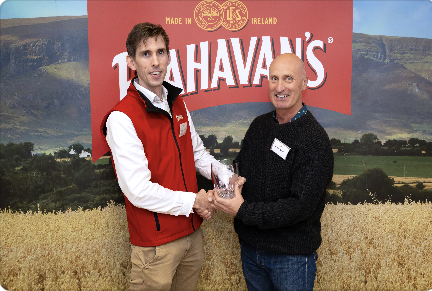
Flahavan’s Organic Oat Grower of the Year Award 2026 was presented this week to Angus Woods from Co. Wicklow. The award, which recognises his commitment to producing high-quality organic oats, was presented at Flahavan’s annual Organic Oat Growers Conference h
 Agriculture
Ballymena Academy pupils take 2026 ABP Angus Youth Challenge crown
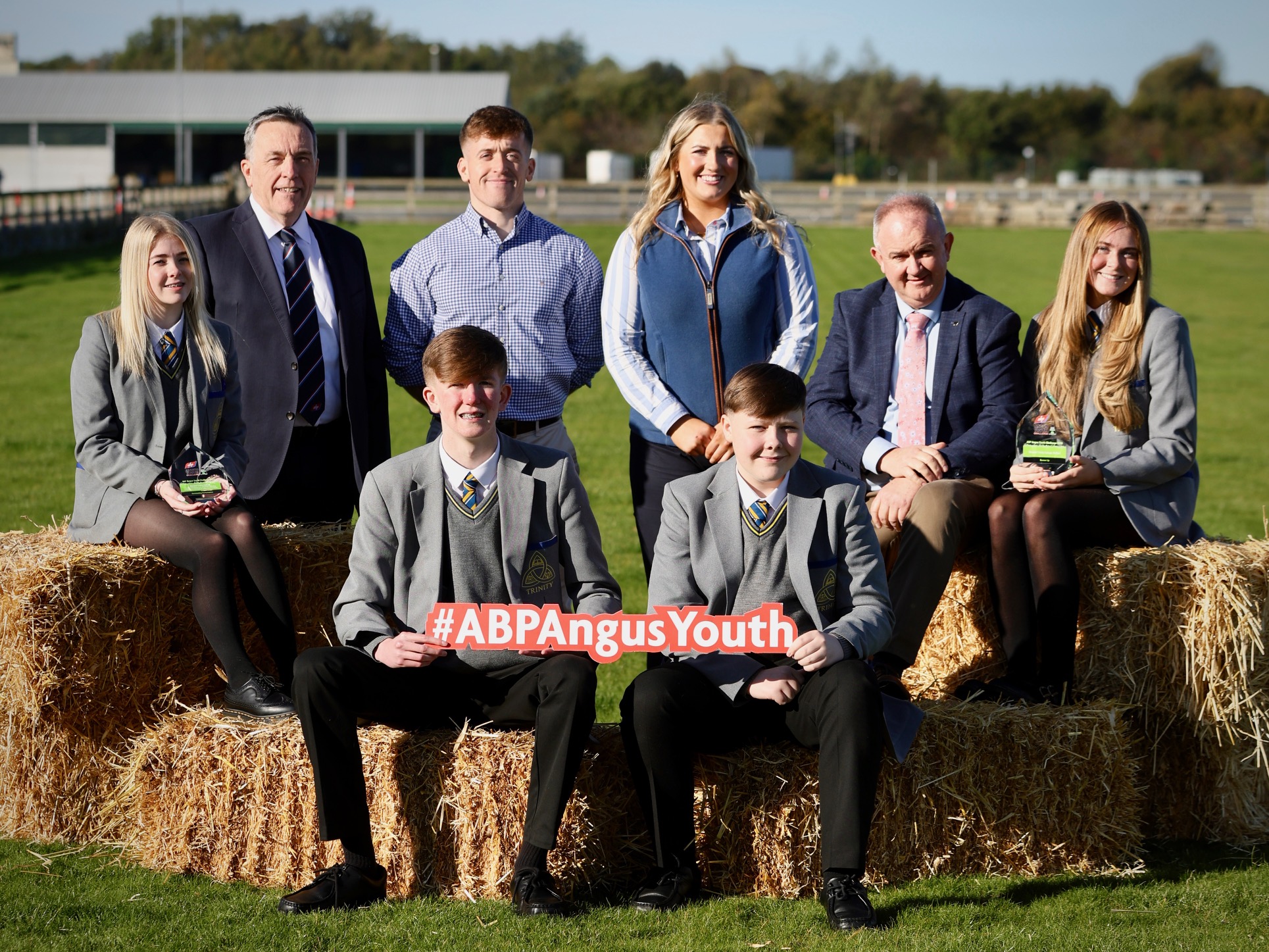
Two pupils from Ballymena Academy have been crowned overall winners of the 2026 ABP Angus Youth Challenge. The Year 12 students, Samantha Dunlop and Katie McNeilly won the competition with their project on how genetics can help improve the sustainability and p
Never miss a headline
The biggest stories in business and finance, delivered to your inbox. Join thousands of readers — unsubscribe any time.