Global survey: Farmers cut costs but embrace new tech
By Chris McCullough
Even though farmers around the world are constantly battling financial uncertainty, they are still keen to invest in new technology that helps them cut costs.
Those are the sentiments harvested from new research carried out by McKinsey which recognises that farmers are becoming more disciplined about spending as they navigate economic uncertainty, elevated input costs, extreme weather, and other pressures.
US consultancy firm McKinsey surveyed 5,500 farmers from 10 leading agriculture producing countries namely: Argentina; Brazil; Canada; China; France; Germany; India; Peru; Spain; and the United States.
The biennial survey, McKinsey’s Global Farmer Insights 2026 , details how farmers around the world are making choices in a fast-changing, complex environment.
Held between April and July 2026, this year’s survey was conducted during a period of significant disruption for the farming industry with a number of factors, including wars, forcing up energy prices and ancillary costs.
Survey results
Overall, the survey found that farmers’ intention to invest was down by 24%, compared to the last survey in 2024, but most said they are likely to increase spending over the next 12 to 18 months.
Some of the key areas that farmers had decided to cut costs was by delaying major purchases, or restructuring investment stages.
36% of farmers cited fertiliser as the first area where they would decrease spending when profitability falls, with 50% saying they would restore it first as profits recover.
Farm equipment showed a similar dynamic, with 16% of farmers saying equipment purchases would be cut first, while 36% expect to prioritise funding as profits recover.
Branding has a major influential role in farmers’ spending behaviour, which is an area 35% of North American and 30% of European row-crop farmers wanted to deviate from, expecting to shift toward generic crop-protection products, for instance.
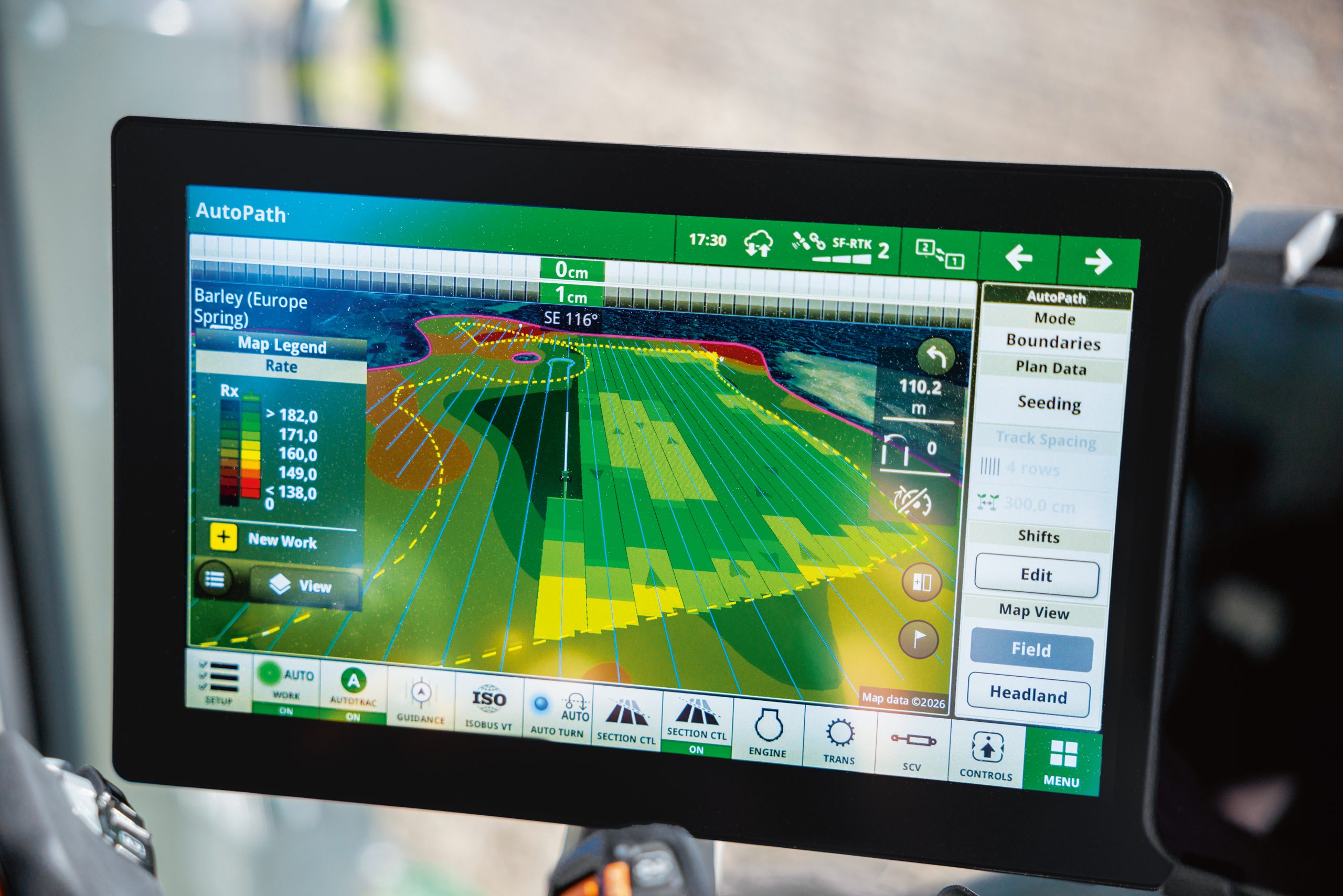
Despite the spending pressure, farmers continue to adopt new products and technologies selectively.
Biologics have become a staple of the farmer’s input portfolio with 41% of farmers adopting biocontrols, and 48% adopting biostimulants.
While growth of established agricultural technology showed signs of slowing down, gen AI, by contrast, has quickly gained traction with 17% of farmers globally already using it for farm-related tasks including planning and crop management.
This pace of adoption is notable in an industry where new technologies have historically faced a high bar for uptake due to upfront equipment or hardware investment and challenges integrating with existing systems.
In the United States, both overall and paid gen AI use have increased at a pace on par with the fastest adopted technologies for agriculture.
Outlook overall
The general conclusion from the survey indicates that across spending, inputs, technology, and purchasing behaviour, farmers remain willing to spend and innovate, but increasingly on their own terms.
David Fiocco, senior partner at McKinsey, said: “Geopolitical tensions and conflicts, most recently in the Strait of Hormuz, have shifted trade flows while contributing to higher energy and input costs.
“These forces, combined with local policy uncertainty, increasingly unpredictable weather, and labour shortages, are making farm-level decisions harder and more complex.
“Faced with this volatility, farmers are becoming more cautious, deferring spending in the near-term while planning to reinvest as profitability improves,” he said.
Related Stories
Ireland ‘exceptionally exposed’ to volatility in global dairy market
Watch: ‘Ireland’s in trouble’ if young generation leaves farming – McDonald
Farmers offered new tools to help navigate beef market challenges
.editor-styles-wrapper .wp-block-acf-related-stories-block { max-width: 960px !important; background-color: var(--color-gray-default); padding-inline: 40px; padding-top: 8px !important; padding-bottom: 20px !important; }
Source: Agriland. Summary reproduced for informational purposes.
Related
 Agriculture
Opinion: Could climate change be a good news story for Irish agriculture?
I think it’s safe to confirm that climate change is a reality. What’s more, this process continues to build momentum. The intensity of the weather changes that have impacted across Ireland and the rest of Europe over the past number of years must be fully reco
 Agriculture
Factory quotes: Beef trade firm but warning store trade ‘out of kilter’
This week’s factory quotes sees the beef trade remaining on firm footing but procurement staff are warning that the current rising store trade is “out of kilter” with no signals of beef market certainty. With Ploughing 2026 now behind us, the autumn store catt
 Agriculture
Grocery trips and volumes spike as shoppers gear up for school
Take-home grocery sales in Ireland increased by 5.5% over the four weeks to September 6, 2026, compared to the same period last year. This is according to the latest data from Worldpanel by Numerator. Grocery inflation also rose this month, with like-for-like
 Agriculture
How pig farmers can benefit from growth of hybrid rye production in Ireland
The use of native grown hybrid rye in pig diets has increased in recent times, with the quantities available for feeding seem set to increase in the years to come. According to Teagasc, the area set to winter rye in Ireland for 2026 is projected to be 5,000ha
Never miss a headline
The biggest stories in business and finance, delivered to your inbox. Join thousands of readers — unsubscribe any time.